A manufacturing city's floors
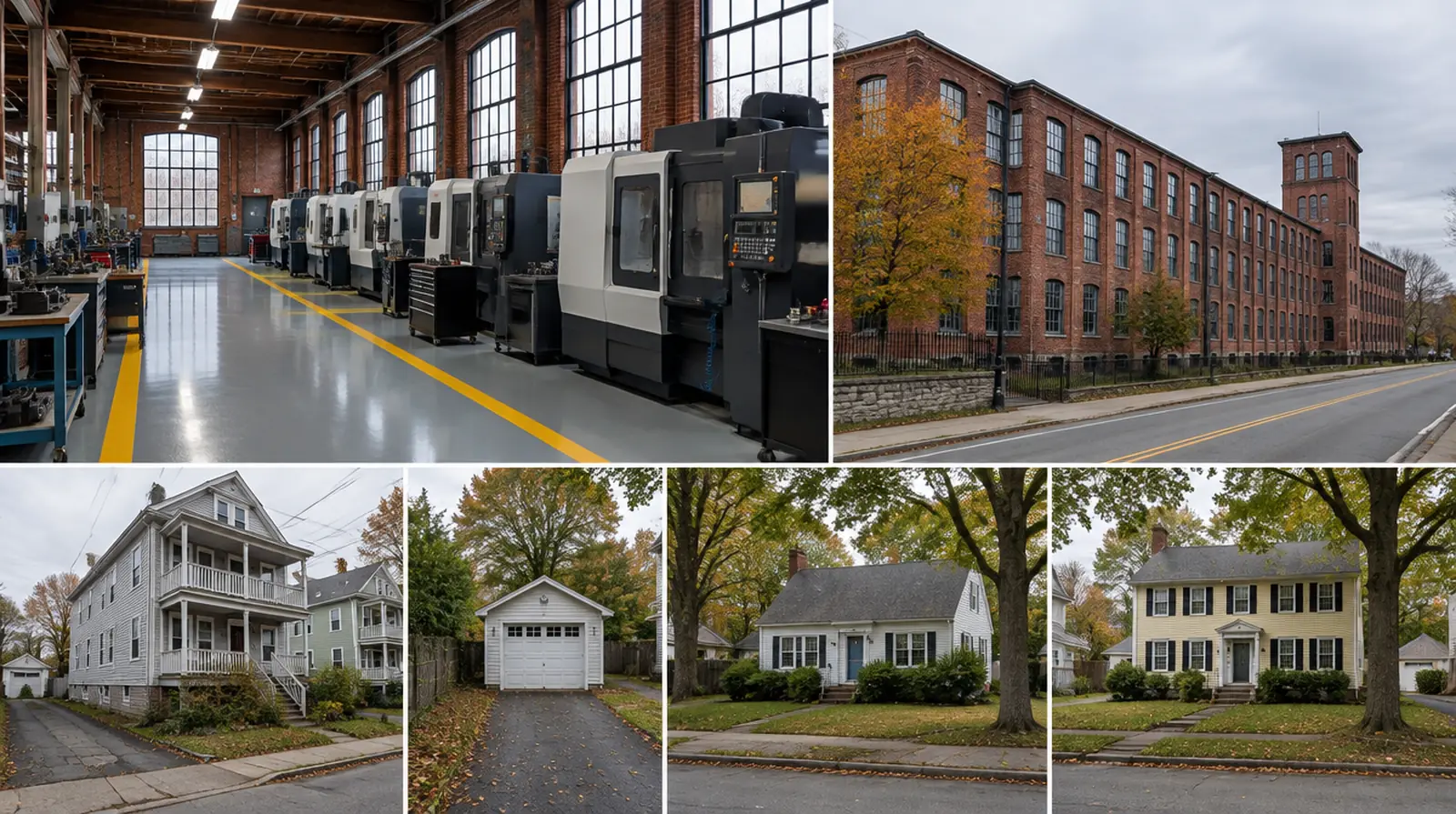
Precision manufacturing still matters here. Machine shops, tool makers, metal fabricators and assembly operations work on concrete that sees coolant, cutting oil, metal chips, pallet jacks and forklifts every shift. Bare or painted concrete in those spaces dusts, stains and becomes a slip hazard. A properly specified commercial coating protects the slab, brightens the space and makes housekeeping easier.
Matching the system to the work
High-build epoxy
A thick, solvent-free epoxy works well for assembly areas, warehouses, storage and light manufacturing. It resists oils and most chemicals and holds up to rolling carts.
Epoxy mortar
Troweled quarter-inch epoxy mortar handles heavy impact, steel wheels and dropped parts. It also rebuilds badly worn concrete in older plants.
Urethane cement
For commercial kitchens, breweries and food processing, urethane cement tolerates hot water wash-downs, thermal shock and food acids that destroy standard epoxy.
Chemical-resistant novolac
For battery rooms, plating areas and secondary containment, novolac epoxies resist strong acids and solvents.
Old buildings need careful prep
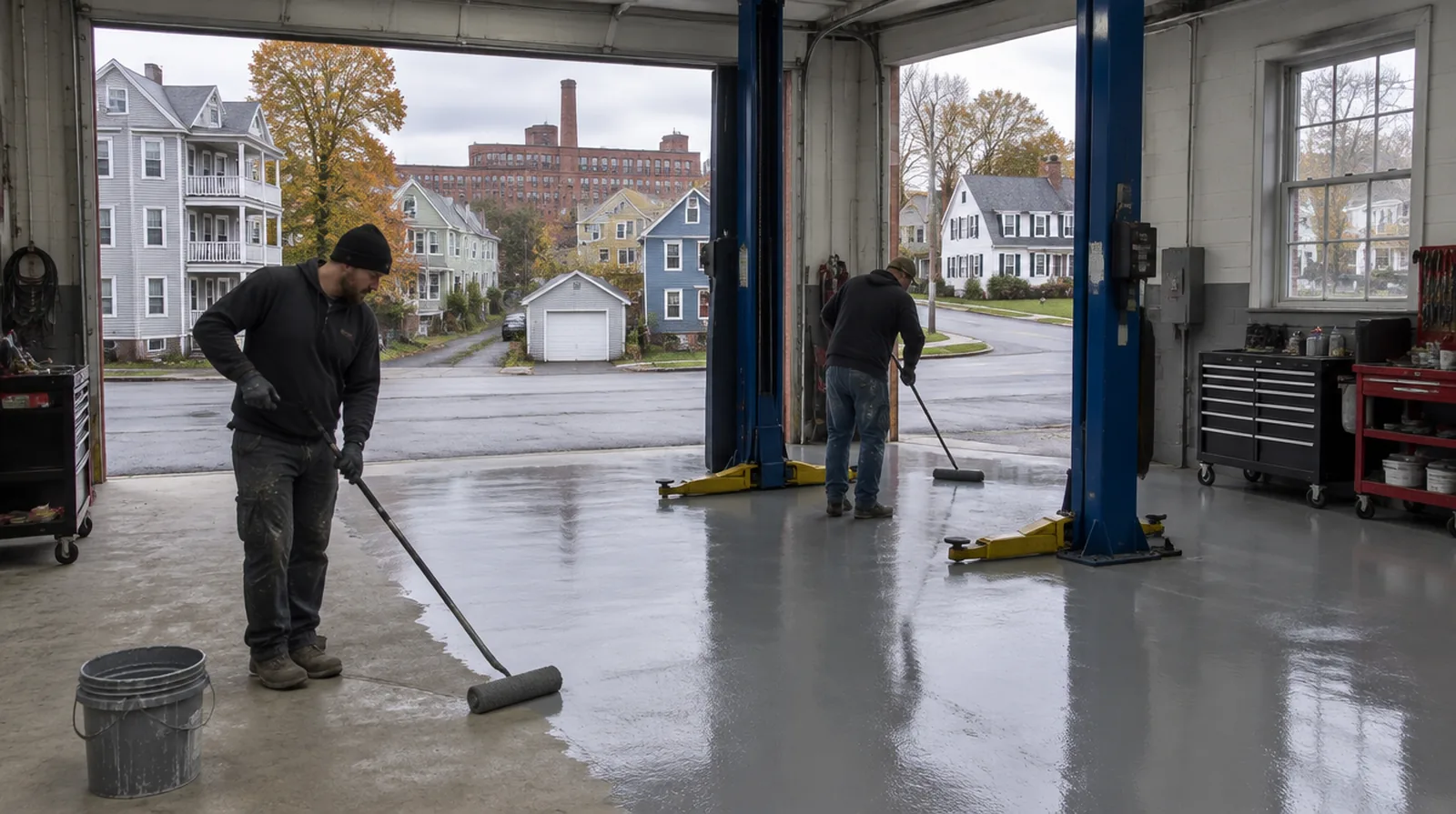
Many commercial spaces here sit in buildings that are seventy to more than a hundred years old. Their floors may have been patched repeatedly, soaked with oil for decades or covered with layers of paint and adhesive. We shot blast or grind to sound concrete, degrease oil-saturated zones, fill old anchor holes and trench drains and repair joints before coating. Proper prep is what keeps a coating bonded under heavy use.
Safety and organization
We add aisle striping, forklift lanes, hatched no-go zones and color-coded work cells as part of the installation. Textured topcoats increase grip in wet or oily areas. Light-colored floors also improve visibility and can reduce lighting needs in large spaces.
Minimizing downtime
We know shutdowns are expensive. We can work nights and weekends, coat in phases so part of the facility stays running and use fast-curing materials to return areas to service quickly. Before work starts, we plan the sequence with your operations team.
Industries we serve
- Machine shops and tool and die makers
- Warehouses and distribution
- Auto repair and detailing shops
- Restaurants, bakeries and commercial kitchens
- Breweries and beverage production
- Gyms, schools and municipal facilities
- Medical and laboratory spaces
Maintenance
Commercial floors are easy to clean with auto scrubbers or mops and neutral cleaners. We provide written maintenance guidance and can recoat high-traffic areas before wear reaches the concrete.
Questions
Can you coat around machines that cannot be moved?
Yes. We mask and coat around fixed equipment and can return later for areas that open up.
Do you provide product data sheets?
Yes, for every product used, along with batch numbers at closeout.
How large a space can you handle?
From single bays to full plants.
Request a site visit
Contact us to schedule a walkthrough of your facility.
Documentation and warranty
Every commercial project comes with a written warranty on adhesion and workmanship, plus a closeout package with product data sheets, batch numbers and maintenance guidance. Facility managers find those records useful for audits, insurance and planning future work, and they make any warranty conversation straightforward.
Food and beverage rules
Kitchens, bakeries and beverage producers need floors that pass health inspections. Seamless urethane cement with integral cove bases eliminates the grout lines and cracks where bacteria hide. We slope floors to drains where needed and choose textures that stay safe when wet yet still clean easily with a deck brush and hose. Our crews can work overnight so a kitchen misses as few service days as possible.
Request a site visit
Call (959) 208-4601 for a free estimate.