Why bare concrete wears out
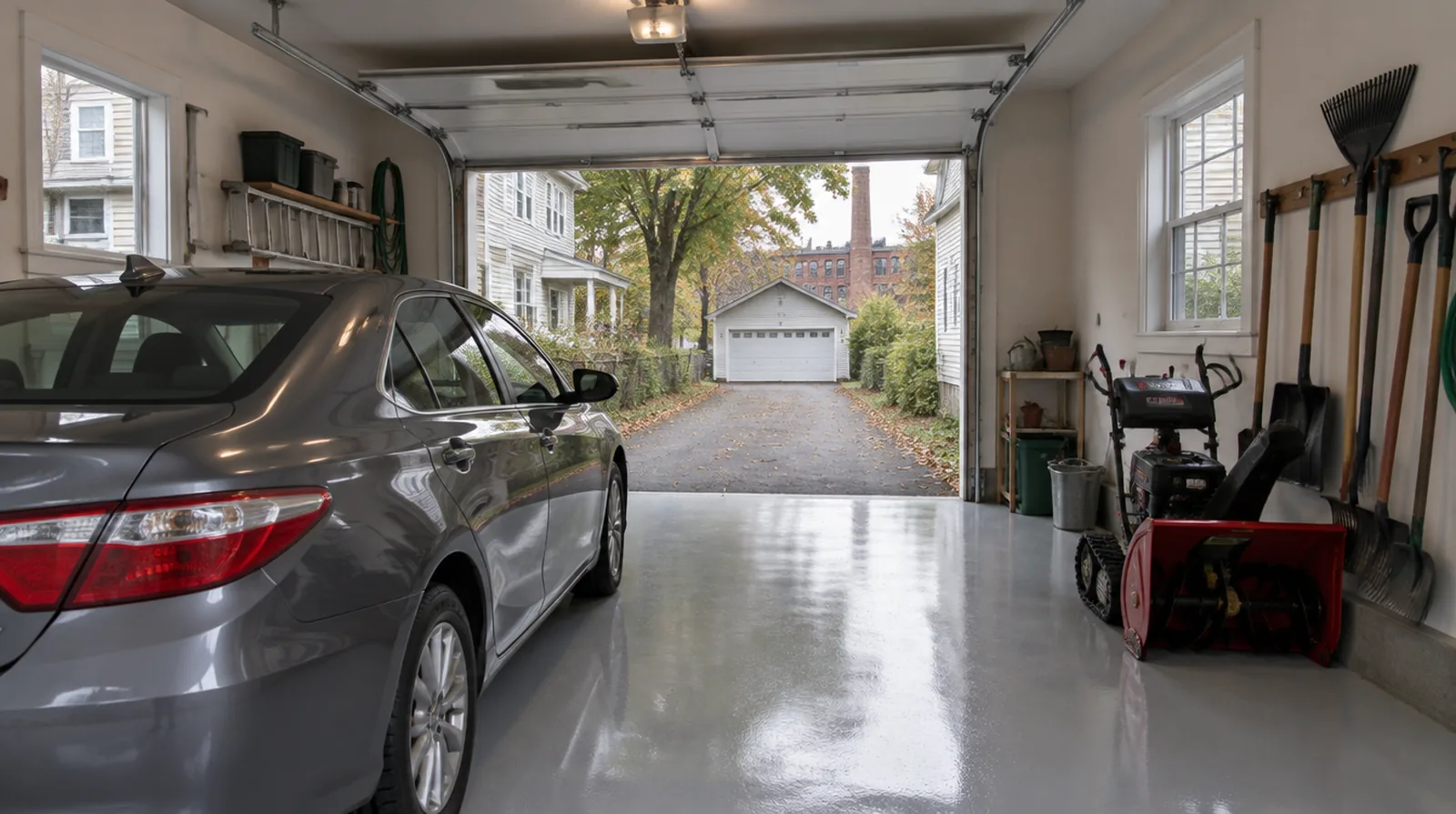
Concrete looks solid, but it is full of tiny pores. Water, oil, road salt and dust work into those pores every day. In a New England garage, the biggest culprit is winter brine. It drips off the car, soaks in and freezes. Ice takes up more room than water, so each freeze breaks a little more of the surface loose. Add oil drips that soften the paste and a car that rolls in and out twice a day, and an old slab ends up dusty, pitted and stained. Epoxy seals those pores and gives the floor a hard, cleanable surface.
Preparation is most of the job
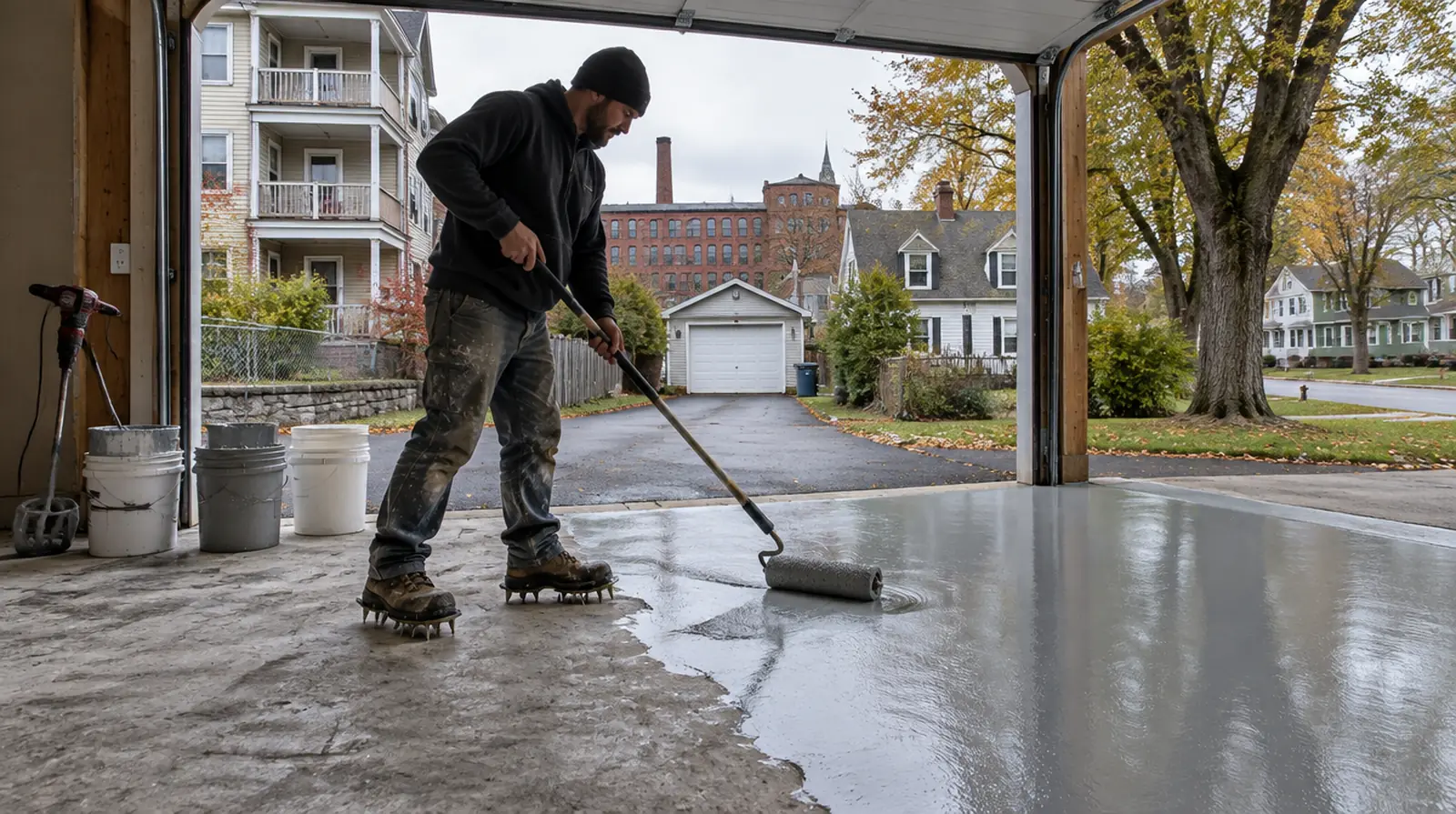
The coating is only as good as its bond, and the bond depends on preparation. We never acid etch. Instead we diamond grind the entire floor with a dust-controlled machine to remove the weak top layer, old paint, sealers and surface contamination. On older garages we often find patches, ridges and spots where oil has soaked deep. Heavily oiled areas get degreased and ground again. Cracks are opened and filled. Pitted or spalled areas are rebuilt with epoxy mortar and ground flush so the finished floor is smooth and even.
A system, not a single coat
Primer
A low-viscosity primer penetrates the ground surface and anchors everything above it. Over slabs with elevated moisture readings, we switch to a moisture-tolerant primer.
Body coat
A thick, high-solids epoxy layer provides color and impact resistance. Store-bought kits are mostly water and solvent and go on very thin. Ours builds real thickness.
Topcoat
A polyaspartic or urethane topcoat protects against salt, chemicals, scratches and fading where sunlight hits the floor near the door.
Detached garages
Many garages in town sit apart from the house and are not heated. That affects scheduling. Epoxy cures slowly in cold conditions, so we plan detached-garage projects for mild weather or bring heaters to warm the slab and air. We also check for gaps under the door and along the walls where water runs in during storms, since that water ends up on the new floor. Sometimes a simple threshold seal makes a big difference.
Uneven and settled slabs
Old garage floors are rarely flat. Frost, settling and decades of patching leave dips and humps. Small low spots get filled with troweled mortar. Where a slab has heaved at a crack, we grind the high side down. The goal is a floor that drains toward the door rather than pooling slush under your car.
Color choices
Light and medium grays are the most common picks because they brighten small garages and hide everyday dust. Tan and beige pair well with older clapboard houses. Darker colors look sharp but show salt film more readily. If you want the most forgiving finish, add a decorative flake broadcast.
Slip resistance
Wet, smooth floors can be slippery. We add a fine anti-slip aggregate to the topcoat in walking paths, at the house door or across the entire floor. It provides grip for snowy boots and still mops clean.
What it resists
- Rock salt, calcium chloride and meltwater
- Motor oil, brake fluid, coolant and gasoline drips
- Hot tires after a summer drive
- Dropped tools and dragged equipment
- Lawn fertilizer and pool chemicals in storage
Day-by-day timeline
A typical one- or two-car garage takes one to two days. Day one covers grinding, repairs and the primer and body coat. Day two adds the topcoat. You can walk on it the next day and park after the full cure, usually 72 hours for epoxy.
Questions
Will my old painted floor cause problems?
Not after we grind it off. Coating over old paint is the most common reason DIY floors fail.
Can you coat just part of the garage?
We can, but full floors look best and seal the slab completely.
How long will it last?
With normal residential use and simple care, ten to twenty years, with an optional topcoat refresh later.
Book your garage estimate
Contact us to schedule a free visit.
Get a garage floor quote
Call (959) 208-4601 for a free estimate.