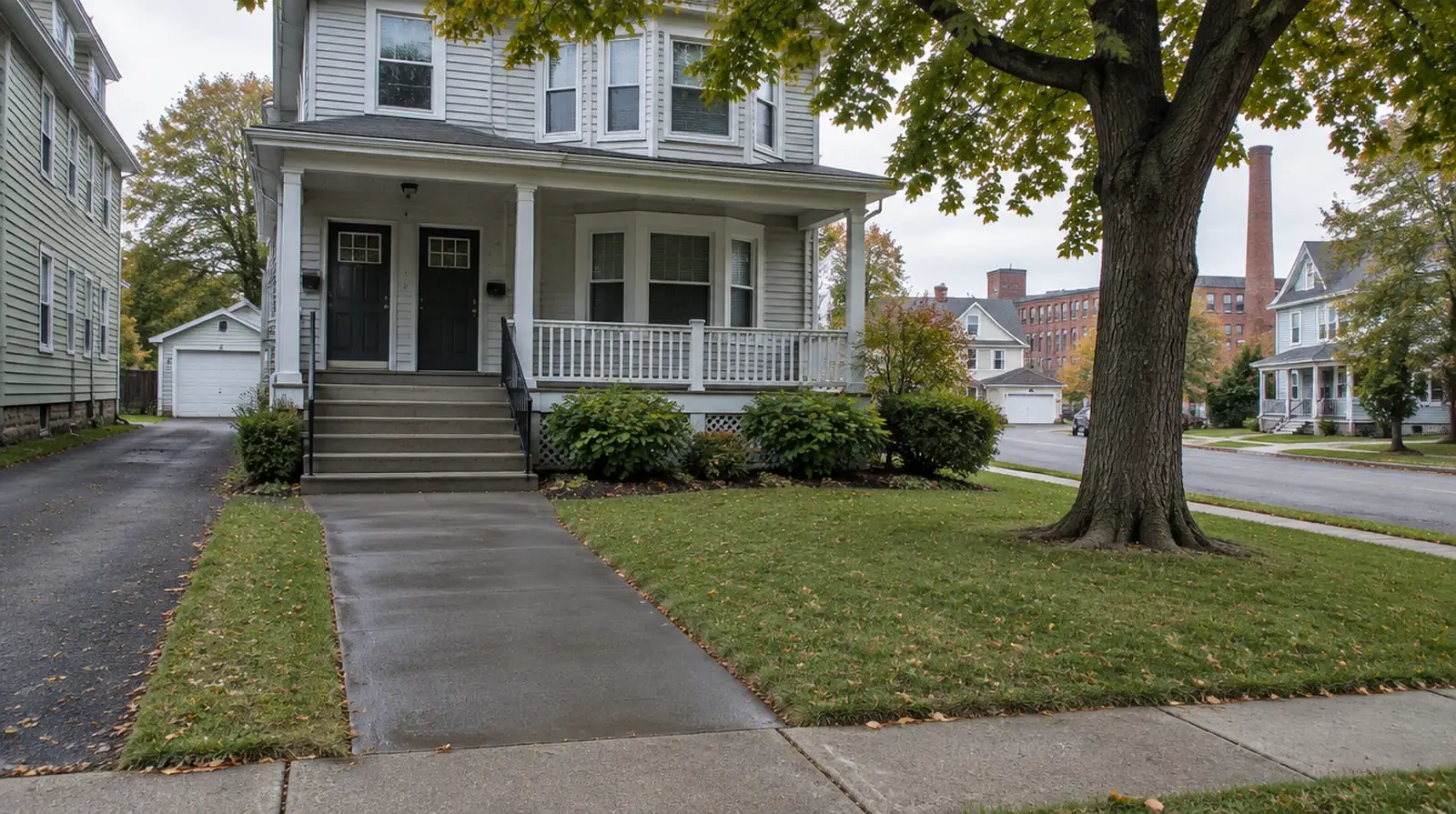
Why outdoor concrete needs sealing
Outdoor concrete here faces snow, rain, freeze-thaw cycles and road salt for months every year. Water soaks into unsealed concrete and freezes, breaking off the surface in flakes. That is called scaling. Salt makes it worse by increasing the number of freeze-thaw cycles and pulling more water into the concrete. A good sealer reduces how much water and salt get in, which slows scaling, pitting and staining.
Penetrating sealers
Silane and siloxane sealers soak into the concrete and react to form a water-repellent barrier inside the pores. They do not change the look of the concrete much, they are not slippery and they let vapor escape. For driveways, walks, steps and garage aprons, they are usually the best choice. They typically last several years before reapplication.
Film-forming sealers
Acrylic sealers form a thin film on top. They enhance color and give a wet or satin look, which suits stamped and colored concrete patios. They wear faster in traffic areas and need resealing more often. We add grit for traction on steps and walks.
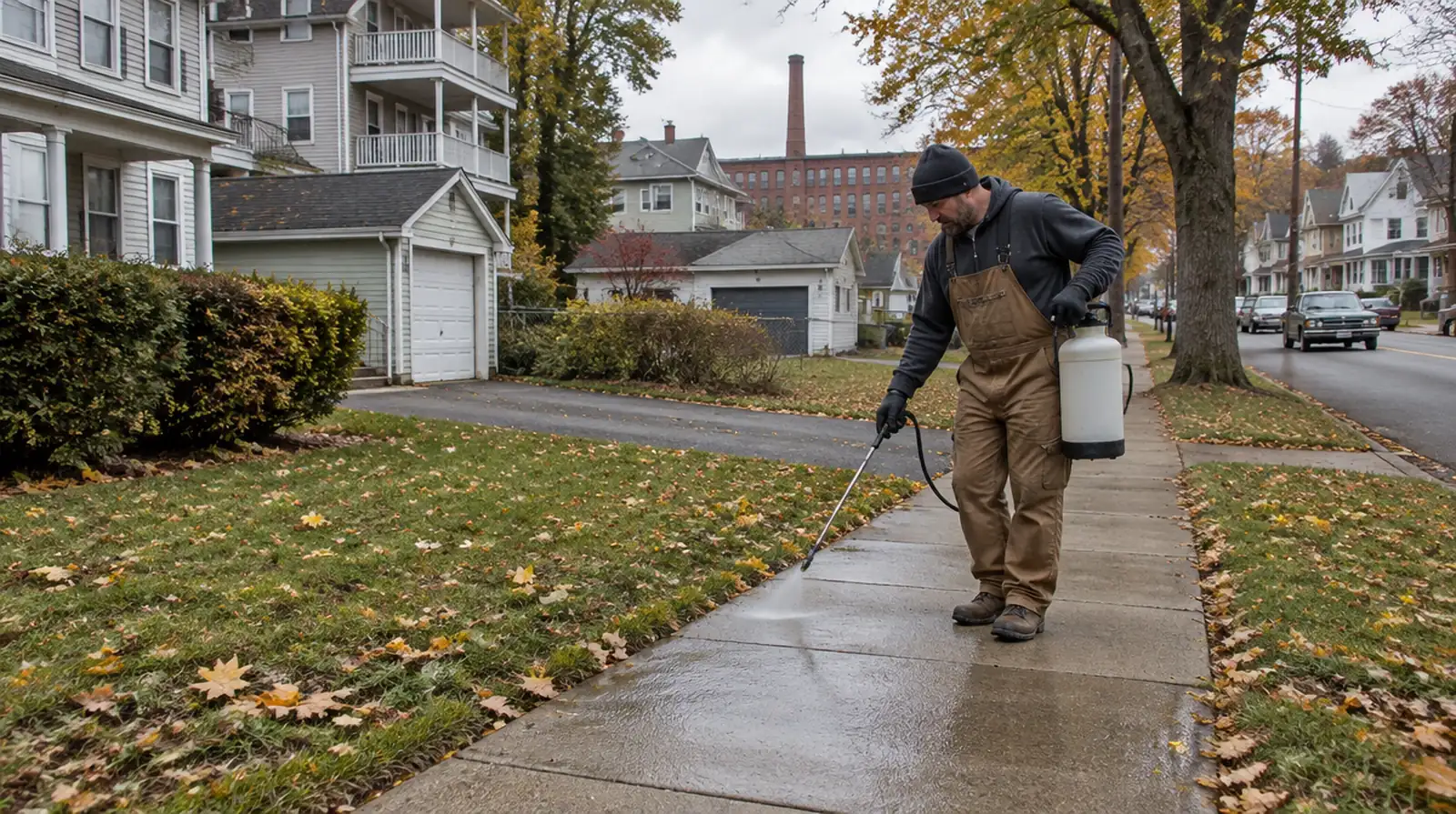
Preparation
Sealer works best on clean, dry concrete. We pressure wash, remove oil stains where possible, let the concrete dry and then apply. Cracks are filled with flexible sealant first so water does not get under slabs and heave them in winter.
When to seal
Late summer and early fall are ideal, when concrete is dry and temperatures are mild, so protection is in place before the first salt goes down. New concrete should cure about a month before sealing. Spring works too, after the winter grime is washed away.
Steps and stoops
Front steps on older houses often take a beating from salt, shovels and constant traffic. Corners chip, surfaces scale and handrail posts rust. We repair chips, seal the surface and edges and can add slip-resistant finishes for safety.
Areas we seal
- Driveways and garage aprons
- Sidewalks and front walks
- Steps, stoops and porches
- Patios and pool decks
- Commercial walks, ramps and loading areas
Questions
Will sealer make my walk slippery?
Penetrating sealers do not. Film sealers can, so we add grit.
How often should I reseal?
Penetrating sealers every three to five years; film sealers every one to three.
Can sealing fix existing scaling?
It slows further damage. For badly scaled concrete, consider resurfacing.
Seal before winter
Contact us to schedule sealing.
Choosing a de-icer
Sealer helps, but the product you spread on the walk in January matters too. Calcium magnesium acetate is the gentlest option for concrete, though it costs more. Plain rock salt is acceptable on mature, sealed concrete if you use it sparingly and sweep up the excess once the ice melts. Products containing ammonium compounds attack concrete chemically and should be avoided entirely. Sand gives traction without any chemical damage, and shoveling before snow gets packed down reduces how much melting product you need in the first place. Combining a good sealer with smart winter habits is the best way to keep outdoor concrete looking good for decades.
Shared walks and multi-family homes
Two- and three-family houses often have long shared walks, side steps and back stairs that every tenant uses. Those surfaces get shoveled and salted by different people with different habits. Sealing all of them at once gives consistent protection, and we can schedule the work so at least one entrance stays open while the sealer dries.
We bundle apron sealing with interior garage projects at little extra cost.
Schedule sealing
Call (959) 208-4601 for a free estimate.