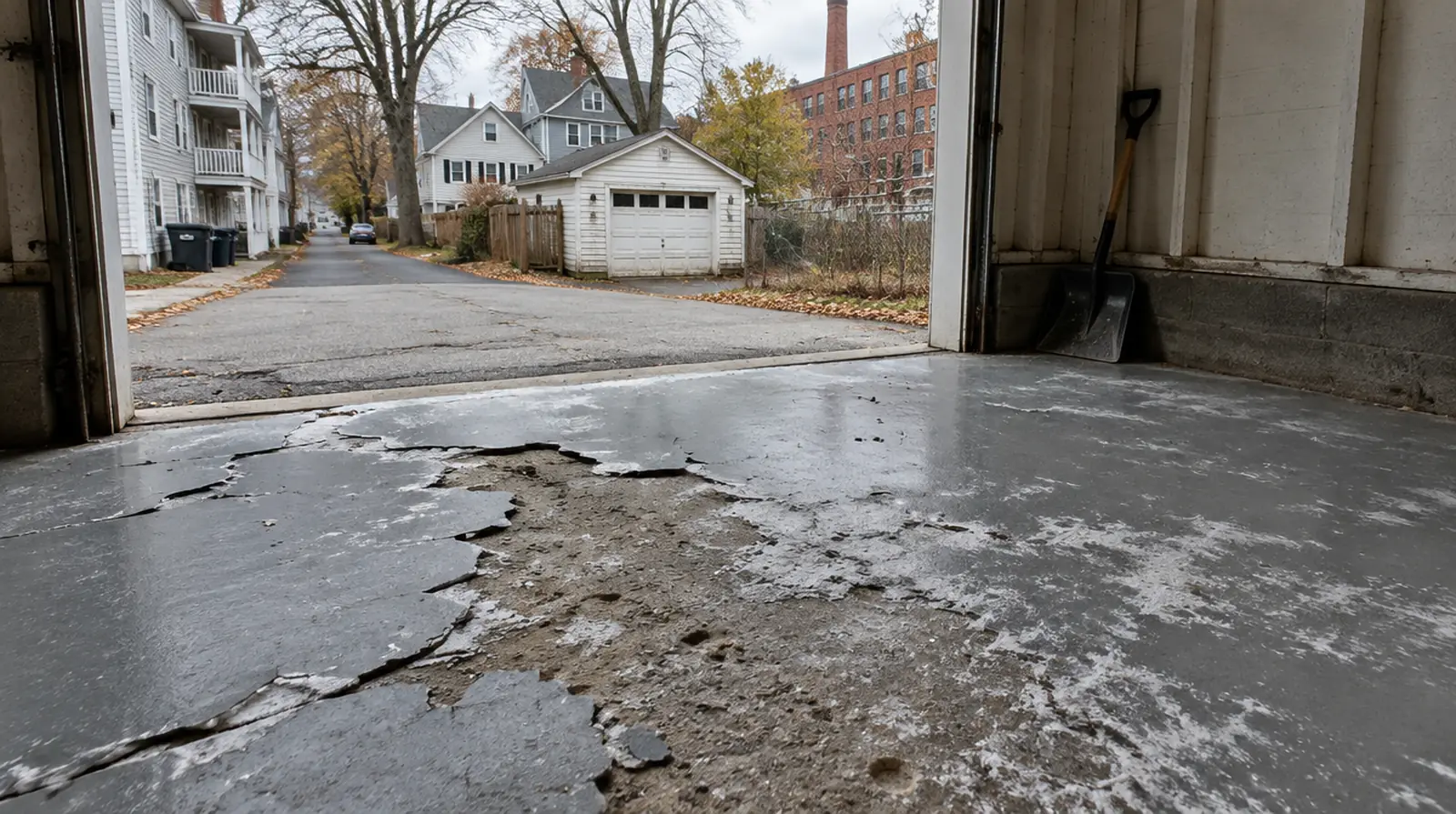
Why coatings fail
We see a lot of failed floors, and the causes repeat. Most come down to preparation, moisture or the wrong product.
No grinding
Coatings rolled over smooth, unground or acid-etched concrete do not bond well. They lift under hot tires, scrape off under shovels or peel in sheets.
Moisture from below
Basements and older garages often have vapor moving up through the slab. Non-breathable coatings trap it, and it pushes the coating up in blisters.
Thin kit products
One-part epoxy paints and water-based kits are very thin. They wear through in traffic paths and can soften under salt and chemicals.
Coating over old paint or sealer
A new coating can only hold as well as whatever is underneath it. If that is old, loose paint, failure follows.
Diagnosing the problem
Before we suggest a repair, we inspect the floor. We look at where it is failing, check how well the remaining coating is bonded, test moisture and sometimes cut a sample to see what layers are present. That tells us whether a patch can work or whether the floor needs a full removal.
Spot repairs
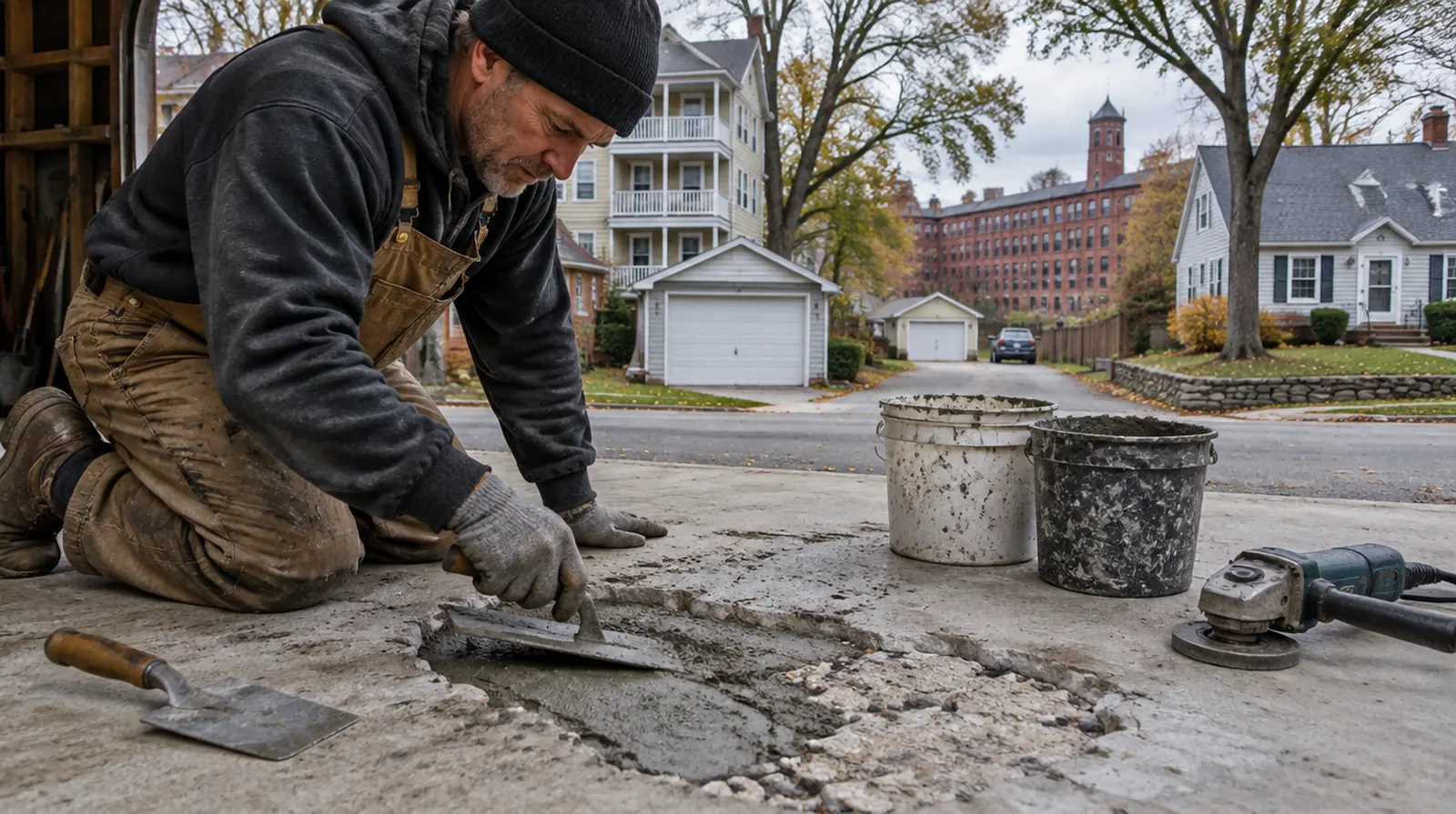
If most of the coating is well bonded and the failure is limited, we can cut back to solid edges, grind the area, fill the concrete and recoat. Matching color and texture exactly can be difficult, so we often finish the whole floor with a fresh topcoat to blend repairs.
Full removal and replacement
When a coating is failing broadly, patching just delays the inevitable. We grind off the old coating completely, repair the concrete and install a new system suited to the conditions. If moisture caused the original failure, the new system includes a moisture-mitigating primer.
Concrete repairs
- Spalling and pitting from salt and freeze-thaw
- Cracks from settling and frost heave
- Broken joint edges and chipped corners
- Old anchor holes and abandoned drains
- Low spots where water collects
We use epoxy mortars, polyurea crack fillers and cementitious overlays depending on the damage and the finish going on top.
Commercial floor repair
Worn traffic aisles, damaged joints under forklift paths and coating failures around machines are common in older plants. We can repair sections during scheduled shutdowns and recoat to restore safety striping.
Preventing the next failure
A good repair includes fixing the cause. That might mean better door sealing to keep water out, a moisture barrier primer, joint repairs that stop movement from cracking the coating or simply a thicker, tougher system.
Questions
Can you match my existing floor?
We can get close, especially with flake floors, but a full topcoat usually gives the best result.
Is it cheaper to repair than replace?
For small, isolated failures, yes. For widespread peeling, replacement is the better value.
How quickly can you fix it?
Many repairs take one to two days.
Get a repair assessment
Contact us with photos to get started.
Before you sell
A peeling garage floor can make buyers wonder what else was done cheaply. Before listing, many homeowners ask us either to remove the failed coating and leave clean concrete or to install a new floor that becomes a selling point in listing photos. Most of these jobs are done within days.
Not sure what caused your failure? Send photos of the worst areas and a wide shot of the whole floor. We can often tell you the likely cause and repair path before we visit.
Schedule a repair visit
Call (959) 208-4601 for a free estimate.