How metallic floors get their look
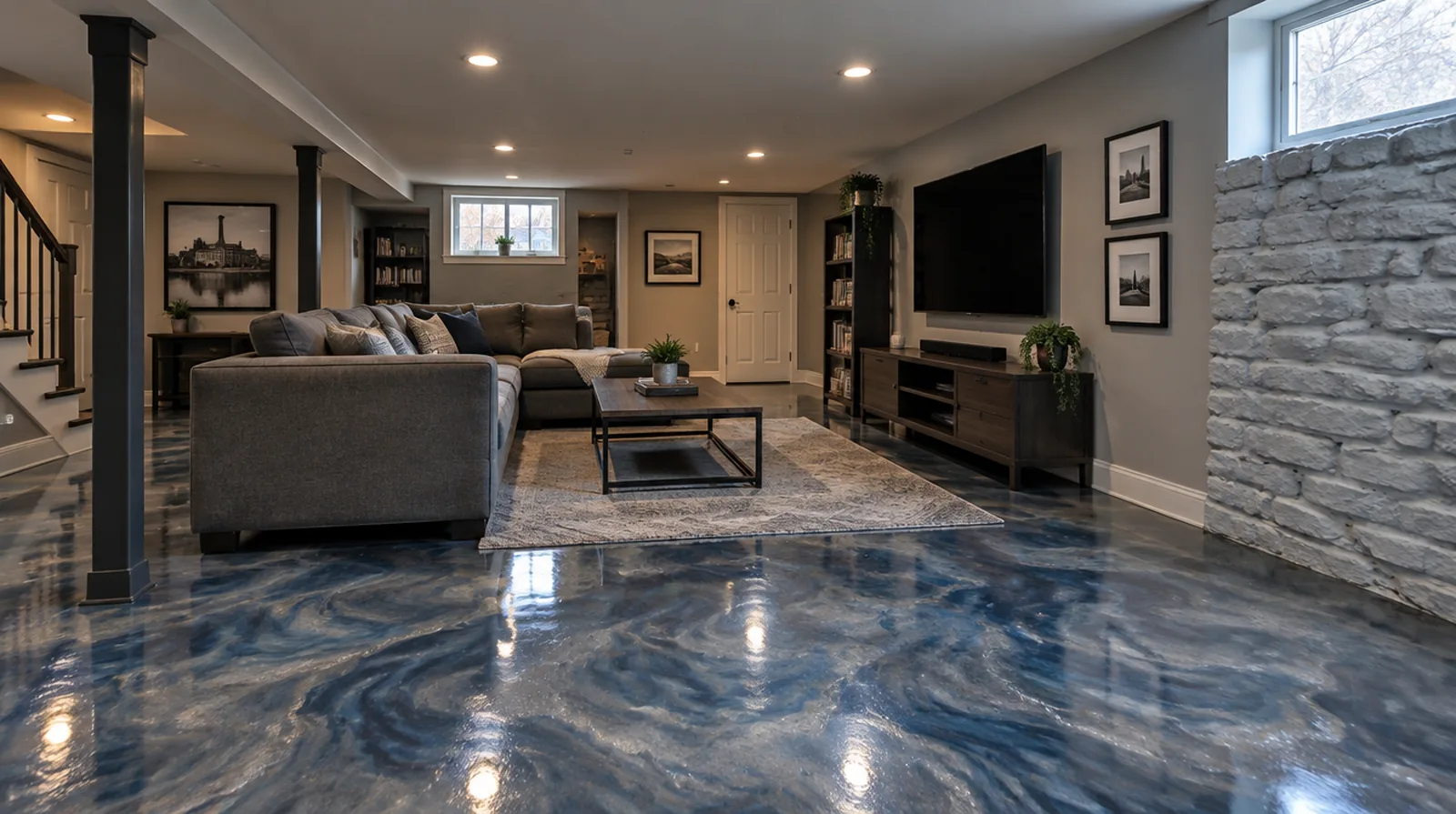
Metallic epoxy contains fine mica and metallic pigments. When we pour and work the material across the floor, the pigments move and settle in different directions. Where they lie flat, they reflect light brightly. Where they stand on edge, they look darker. That creates the swirling, cloudy, almost three-dimensional effect people compare to marble, lava or polished stone. No two floors come out the same.
Why basements are a great fit
Basements in older homes often have uneven, patched concrete and low ceilings. Carpet holds moisture and odors. Tile and laminate can lift if the slab gets damp. A metallic floor is seamless, waterproof on the surface and reflective enough to brighten a room with few windows. It turns a storage area into a living space without adding height or seams.
Moisture comes first
Before we plan a metallic floor, we test the slab. Basements here can have high vapor drive, especially in spring. If readings are high, we use a moisture-mitigating primer under the system. If the basement takes on liquid water, we talk about drainage first. A beautiful floor will not survive standing water from a failed sump.
Designing your floor
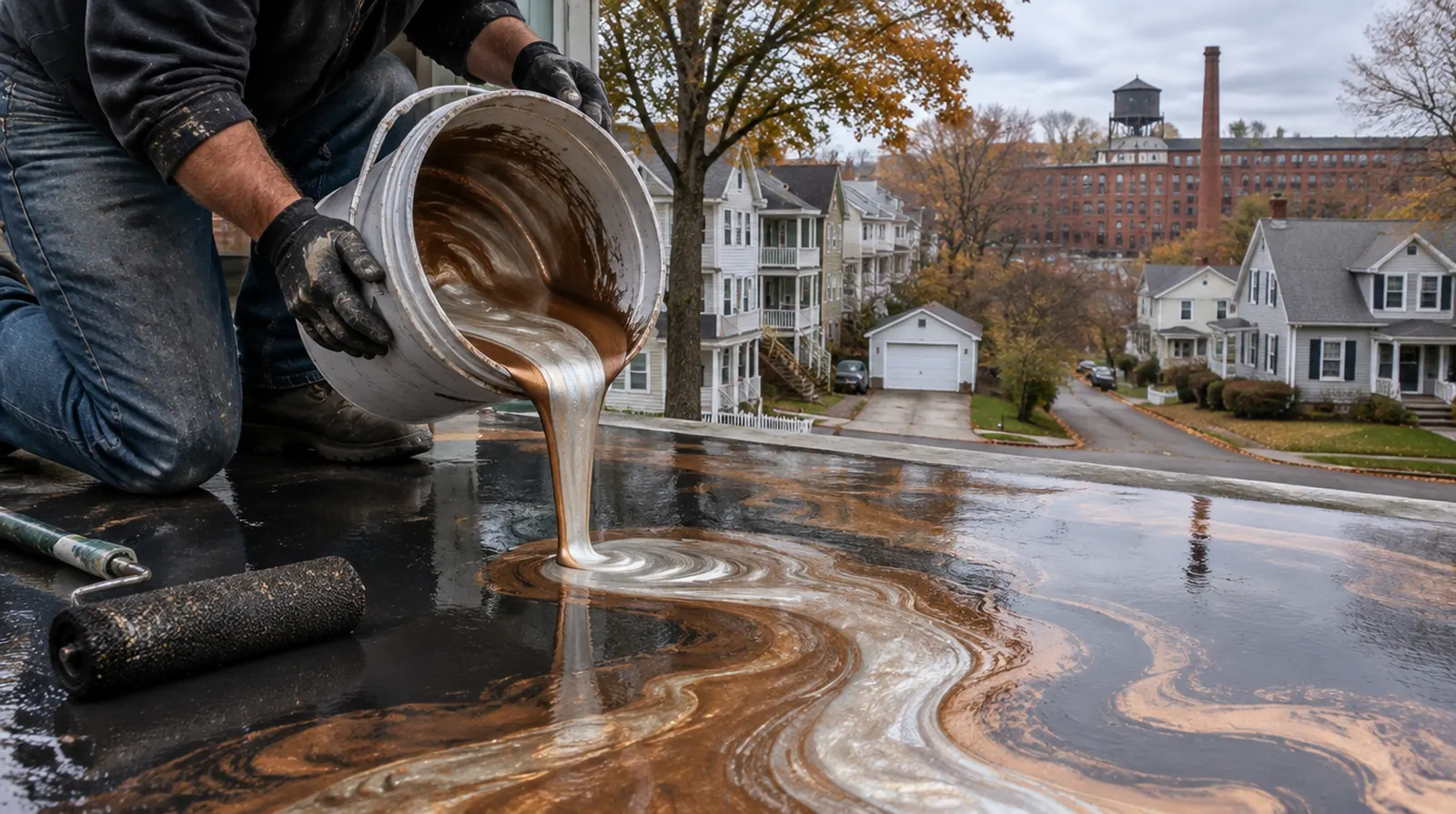
We start with your colors. Some clients want soft grays and pearls that read almost like natural stone. Others want bold copper, deep blue or black and gold. We can create subtle movement or dramatic veining. We bring sample boards and photos of previous work, and we talk through furniture placement and lighting so the most striking areas land where they will be seen.
The installation
Preparation
We grind the floor, fill cracks and level low spots. Any flaw in the base shows through a metallic floor, so we take extra care here.
Base coat
A solid tinted epoxy layer creates a uniform background color.
Metallic layer
We mix and pour the metallic epoxy and manipulate it with rollers, brushes and sprayed solvents to create movement.
Topcoat
A clear urethane or polyaspartic topcoat adds scratch resistance and lets you choose high gloss or satin.
Other spaces
- Home bars and game rooms
- Garage showrooms for collector cars
- Salons, studios and boutiques
- Restaurant and brewery taprooms
- Offices and lobbies in converted mill buildings
Durability
Metallic floors are as tough as standard epoxy. The topcoat takes the wear. Under normal residential use, they resist stains, scratches from everyday traffic and spills. Felt pads on furniture legs and rugs at the bottom of the stairs help keep the gloss looking fresh.
Comfort underfoot
Concrete floors feel cool. Area rugs warm things up visually and physically. Many clients also pair a metallic floor with a dehumidifier, which keeps the basement comfortable and protects the finish.
Questions
Can you match a color I bring in?
We can get close. Metallic floors vary, so we create a sample board for approval.
How long does it take?
Typically two to three days, including cure time between layers.
Is it slippery?
High-gloss floors can be slick when wet. We can add fine texture to the topcoat for grip.
Plan your custom floor
Contact us to talk about colors and see samples.
Before the pour, we review where seams between rooms will fall, how stairs and thresholds will be finished and where furniture will sit, so the pattern looks its best.
We also plan stair nosings and transitions to carpeted rooms so edges are durable and look finished.
Design a metallic floor
Call (959) 208-4601 for a free estimate.