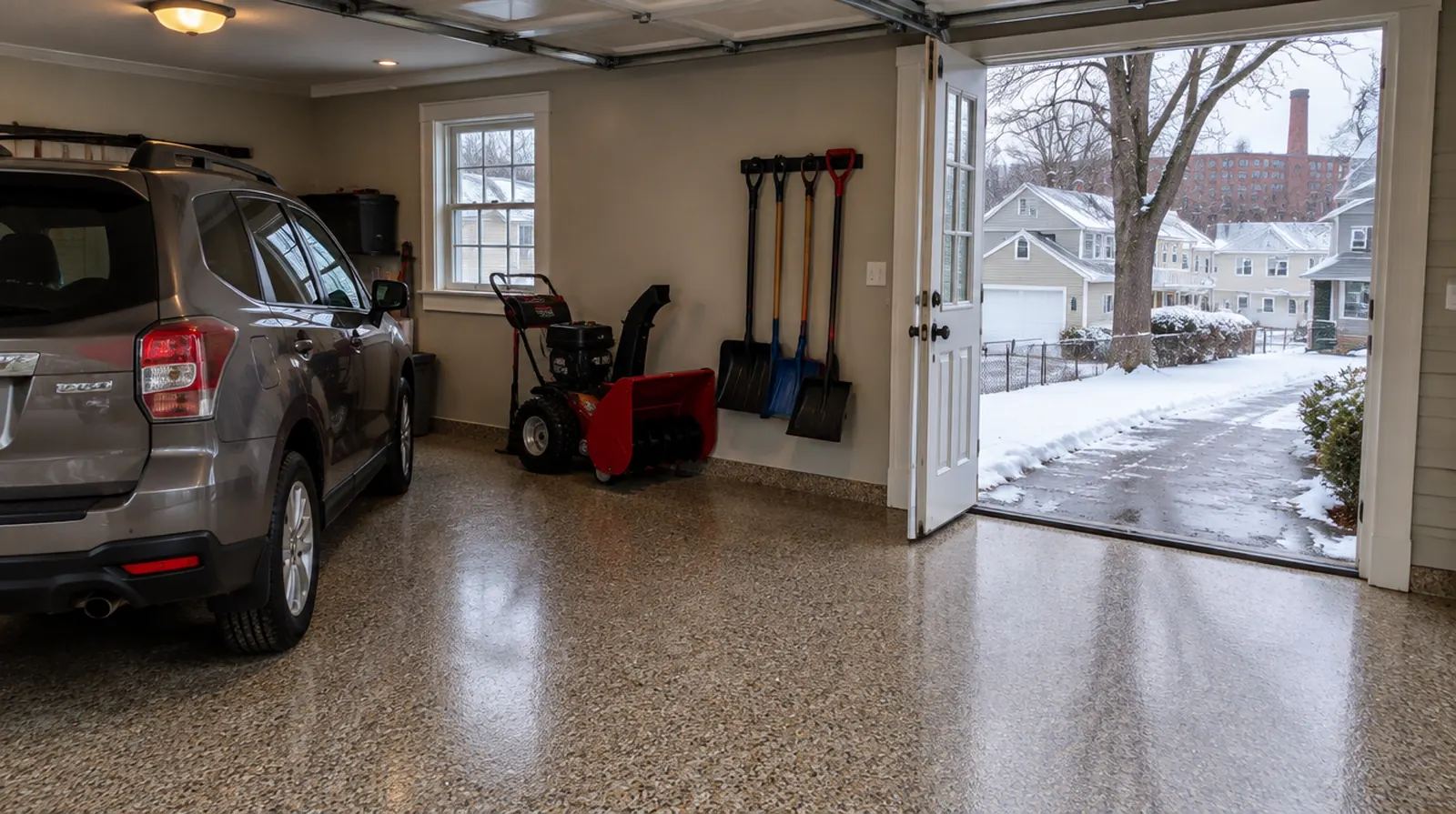
What a flake floor is
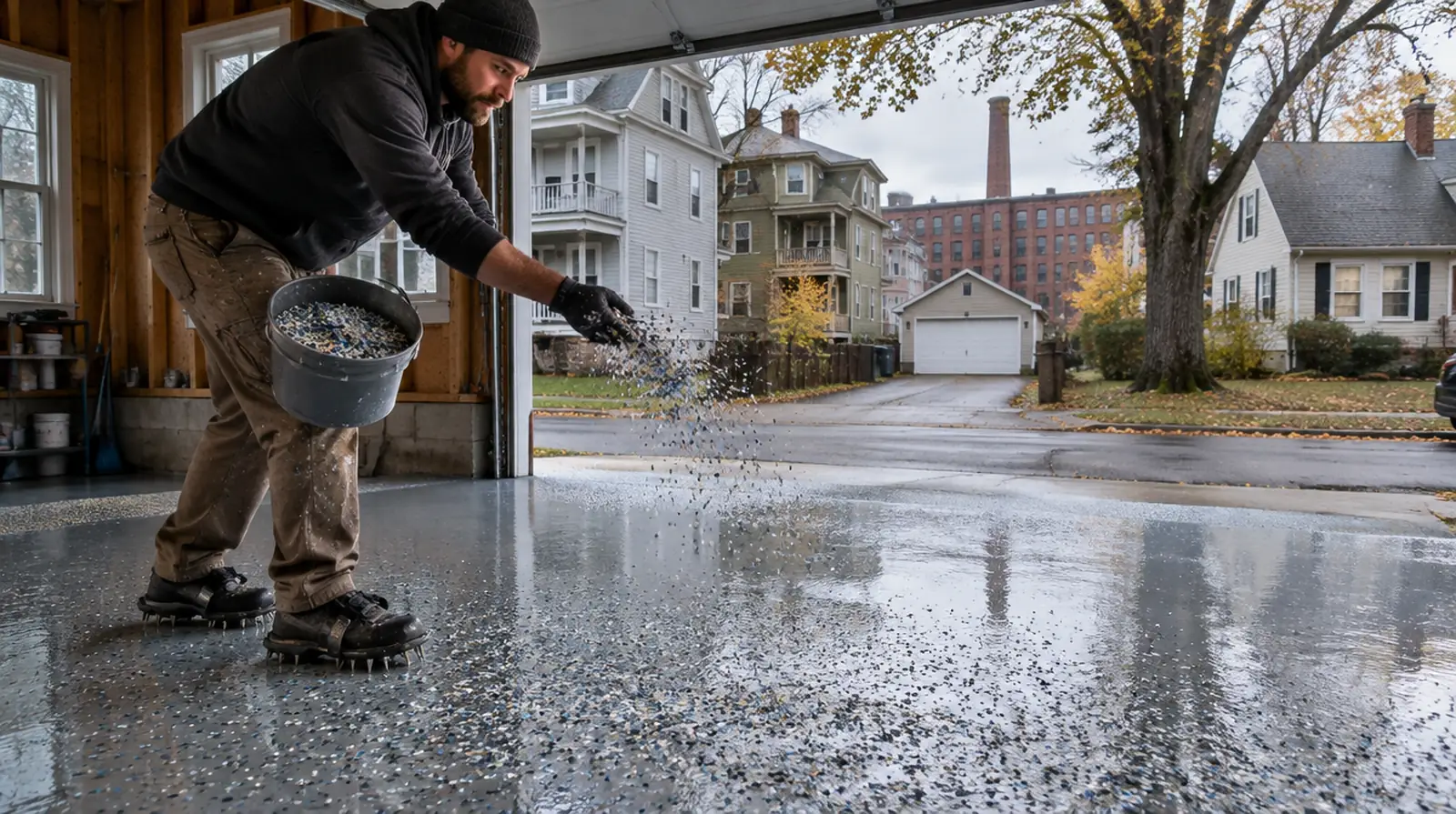
A flake floor starts like a standard epoxy floor: a ground slab and a pigmented base coat. While that base coat is still wet, we broadcast colored vinyl chips across the entire surface until no base color shows. Once it cures, we scrape and vacuum off the loose chips, then seal everything under one or two clear topcoats. The result looks a bit like terrazzo or speckled granite and has a subtle texture underfoot.
Why it suits this area
Winters here are long and messy. Sand, salt, leaves and slush get tracked in from November through April. A solid-color floor shows every footprint. A flake floor hides most of it, so the garage looks clean even between sweepings. The texture also gives boots and paws more grip than a smooth gloss finish, which matters when the floor is wet.
Choosing a blend
Chip blends come in dozens of color combinations. Grays, blacks and whites have a modern look. Tans, browns and creams feel warmer and complement brick and wood. Blues and greens add personality to a workshop or a kid's play space. Chip size matters too: quarter-inch chips are the most common, smaller chips look finer and denser and larger chips create a bolder pattern. We bring sample boards so you can compare them in your own lighting.
Full broadcast versus partial
A partial broadcast scatters chips lightly over the base color. It costs a bit less and has a more casual look. A full broadcast covers the base completely and creates a thicker, tougher floor with better texture. For garages that see winter traffic, we recommend full broadcast.
Preparation and repairs
Like every system we install, flake floors start with diamond grinding. We fill cracks and pits, then prime. Because the flakes add visual texture, small surface imperfections in an old slab are much less noticeable than with a solid color. That makes flake floors a popular choice for older garages with patched or uneven concrete.
Topcoat options
The clear topcoat does most of the protecting. Polyaspartic topcoats are tough, cure fast and resist yellowing. We can adjust texture by applying the topcoat thinner for more grip or thicker for a smoother feel. For basements and mudrooms, a slightly smoother finish is easier to mop. For garages and ramps, more texture is safer.
Beyond the garage
- Basement laundry rooms and utility areas
- Mudrooms and back entries
- Home gyms and workshops
- Three-season porches with concrete floors
- Commercial restrooms, locker rooms and break rooms
Cove bases
We can run the flake system a few inches up the walls to form a cove base. It seals the joint between wall and floor, keeps water from soaking into drywall or old plaster and makes edges easy to wipe clean. It is especially useful in basements and laundry rooms.
Taking care of it
Sweep with a soft broom or dust mop. Mop with warm water and a mild cleaner. Rinse dried salt film in winter. Avoid harsh acids or abrasive pads. That is all.
Questions
Is it hard to clean with all that texture?
No. The texture is fine enough that a mop and squeegee work well.
Can flakes come loose?
Not once they are sealed under the topcoat. Loose chips are removed before sealing.
How long does it take?
Most garages are done in one or two days.
See chip samples in person
Contact us and we will bring sample boards to your estimate.
Ask about flake floors
Call (959) 208-4601 for a free estimate.